
Fit Is a Measurement Problem Before It Is a Lifting Problem
A large sectional may be modular, but the largest rigid section still has to pass through the entrance, stair turn, and room opening in an Overland Park home. Before choosing a furniture mover, measure the piece and the route, identify what disconnects safely, and ask the company to assess how it will protect and place each section. A living-room photograph is helpful but cannot prove the sofa will fit through a ninety-degree turn. The right service plan deals with both physical feasibility and the condition of the furniture before anyone picks it up.
Suppose a family buys a five-piece sectional from a seller across town. Four modules are manageable; the reclining end section contains a mechanism and cannot fold like an ordinary armless seat. The delivery home has a wide front door followed by a narrow hallway. An Overland Park furniture moving company needs dimensions for the rigid section and photos or a walkthrough of the corner. The buyer also needs to know whether the seller has disconnected each module and whether the pathway is clear when the crew arrives.
Measure the Largest Rigid Section
Take height, width, and depth in the orientation it will travel, including protruding feet or arms. If feet can be removed according to the manufacturer’s design, measure with and without them and bag the hardware. Do not force a connection on a power recliner; ask the seller or appropriate service provider about safe disconnection. Measure the clear doorway when the door is fully open, then the hallway width, ceiling height and turning space. Draw a simple route; a piece that passes a door straight on can still fail around a turn.
At the origin, note steps, stairs, a walkout route and truck parking. At delivery, identify an alternate entry if one exists. A furniture mover can assess a carry, but an owner should not decide alone that a large item can be hoisted through a window or over a balcony. Such methods involve safety and property concerns and may be outside a standard moving scope. Ask for the proposed method and any condition under which the mover would decline the carry.
Disassembly may solve a fit issue, but only if the manufacturer intended the parts to separate or a competent specialist can do so without damaging the frame. Upholstery seams are not necessarily detachable joints. Ask which components the company will remove and reinstall and which you must prepare. If the sofa has electronics, document whether its cords, controls and modules worked before pickup and who will test them after delivery. A mover should not be assumed to repair a mechanism that already has a fault.
Protect the Furniture and the Property
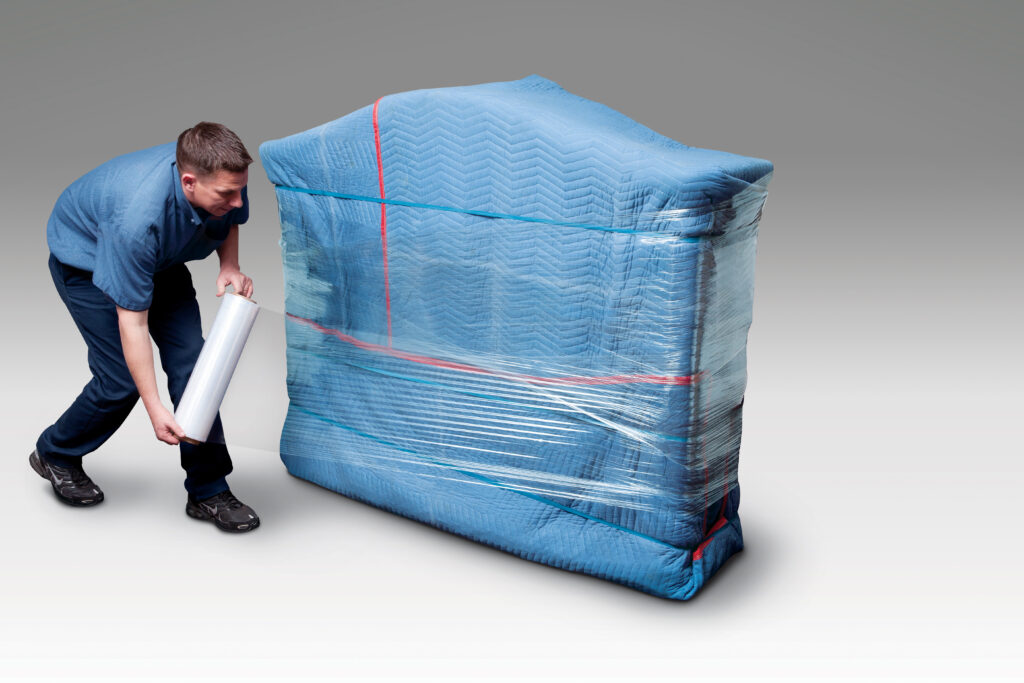
The service quote should describe wrapping, padding, floor and doorway protection, truck securement and placement at the destination. A modular set can have different fabric wear on each piece; photographs help record condition and identify the orientation of each module. Remove loose pillows and keep hardware in a labeled bag. If the seller will not permit a full inspection, note the uncertainty before transport rather than asking the mover to certify the piece’s condition later.
A tight path can also damage walls or floors. Point out freshly painted trim, a fragile railing, or a stair runner and ask how the crew will protect them. The professional should decide the safe number of people and carry method. Do not encourage an unsafe shortcut to save a few minutes. If the furniture must rest temporarily during a turn, the crew needs a clear, suitable location, not a crowded entry piled with boxes.
If you are seeking furniture movers in Overland Park, the matching service page is the appropriate route to discuss the sectional with A. Arnold Moving. Supply measurements and route photos and ask whether an in-person look is needed. Explain if this is a store pickup, a private sale, or part of a whole-house move because access and handoff differ. The company can then scope the actual job rather than a generic “sofa delivery.”
Define the Pickup and Delivery Handoffs
At a private sale, confirm who will be present, when the piece must leave, and whether the seller permits disassembly on site. At a retail pickup, ask about packaging and loading access. Who confirms the correct modules are included? Keep an item list or photograph so the buyer can check the set at delivery. If a store offers only curbside release, find out whether the mover can receive the item at that point and what documentation it needs.
At the new home, mark the final location before the crew unloads. A sectional’s orientation can be reversed, so draw the arrangement rather than relying on “put it by the wall.” Make sure there is room to maneuver and to connect parts. If one section cannot fit through the planned path, the group should pause and compare safe alternatives: another entry, different room, or returning the item under the seller’s terms. Those options should be discussed before a purchase when possible.
Read the mover’s terms for valuation, damage notation, and exclusions. “Professional moving” does not make an ill-fitting item physically fit or guarantee that a private seller will accept a return. Ask who pays for an unsuccessful attempt if the dimensions supplied were inaccurate. A clear written description of the piece, addresses, and access makes that question less contentious. It also lets you compare service proposals for the same work.
A Decision Before the Purchase
If you have not yet bought the sectional, ask the seller for measurements of each rigid module and photos of the connecting hardware. Visit the destination with a tape measure and trace the route. A mover can assess difficult turns, but the buyer should know whether the desired arrangement is plausible before scheduling. If the fit depends on an unverified balcony lift or removing part of the building, treat the purchase as high risk until a qualified party has confirmed the method and permissions.
At delivery, inspect each module before packaging is thrown away and follow the company’s procedure for recording concerns. The strongest furniture-moving choice is a provider willing to discuss the route and limits in advance. A thoughtful assessment can prevent damage, reveal a feasible alternative, or tell you early that a different sectional would serve the room better.
Compare the Room Layout With Daily Use
Even if a sectional fits through the door, it may block a walkway, register, or window access. Mark the intended footprint with tape or a sketch, leaving space for reclining parts to operate if present. Check whether the modules connect in the desired arrangement; left and right orientations cannot always be reversed. If the item needs wall clearance for a mechanism, ask the seller for instructions. This may change the purchase or destination room before a mover is booked. The company can put modules where directed but cannot redesign a room while carrying heavy furniture. Confirm placement with those who live there and give the crew one diagram. A good furniture move begins with a piece that belongs in the space as well as a route that lets it reach that space.
Frequently Asked Questions
Can every sectional be separated into small pieces?
No. Configurations and mechanisms vary. Ask for the manufacturer’s information and measure the largest rigid module.
Will movers remove a door to fit a sofa?
Do not assume it is included or appropriate. Discuss the route, permissions, and who performs any alteration before booking.
Is a photo enough to confirm the fit?
No. Photos help, but clear dimensions and the turns along the full route are needed for an assessment.

Let’s move smarter. Let’s move with A. Arnold. Let’s plan it. Let’s pack it. Let’s move it right. We handle homes. We handle offices. We handle it all with care at A. Arnold Moving. We show up. We communicate. We get it done without the hassle.
Want to talk about your move? Fill out a form here or call us at (913) 829-8267. We’re here to make it smooth, simple, and stress-free. Follow A. Arnold on Facebook to see how we help people move—one truck at a time.


